
On Loss and Risk
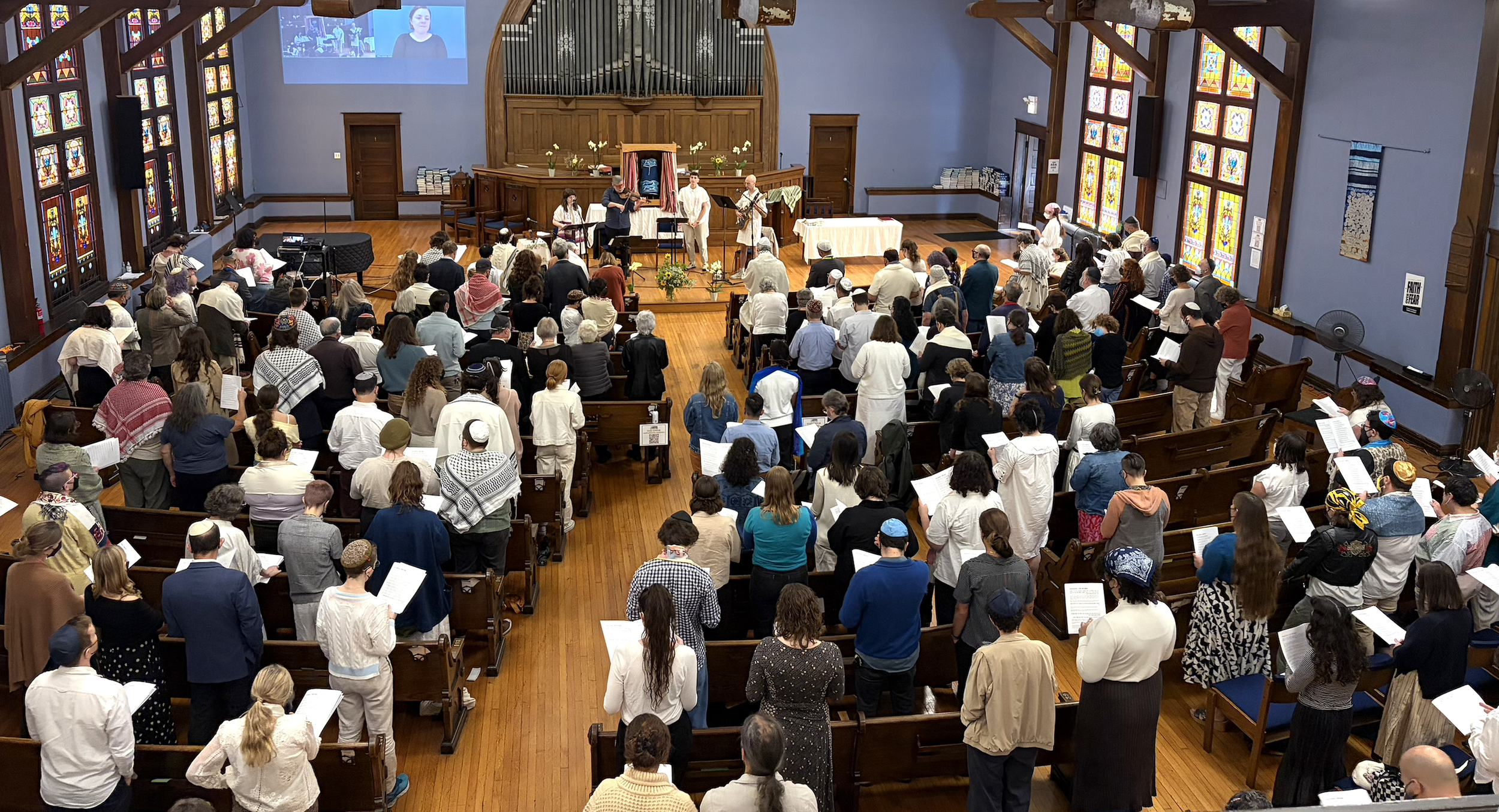
Sasha Perry’s D’var Torah for Kol Nidre 5787
I was lucky enough to be next to an iceberg in the Southern Ocean when it calved. A group of us were on the bow of the ship, oohing and aweing at the site of a million years of existence and beauty. It wasn’t our first iceberg, but anytime the captain called on the intercom that we were coming close to one, we all ran to greet her. It truly never got old. The colors.. every version of blue and white and spectrum between, the size, the shape. It mostly defied logic. This particular viewing was accompanied by a very sudden and loud sound like nothing ive heard before or since. It echoed and grew louder and louder. Like a tree splintering at the thickest part of the trunk, or a series of boulders cascading off the side of a mountain … but also it sounded nothing like those things at all. After the sound, came the sight of a massive shelf of ice hundreds of feet tall splitting off violently from the iceberg and crumbling, crashing, and descending into the depths of the sea… Followed by absolute silence... After a long pause, the whispered ‘ooohs’ and ‘ahhhs’ and ‘wooow, nature! Amazing!’ Giggles and nervous laughter. One of the deckhands next to me was still and silent, staring at the place where the glacier once lived for millenia. She let go of a very deep long sigh. “They’re all going to be gone soon.”
We find ourselves inside 3 years of loss since this latest siege on Gaza, on top of continuing loss from COVID-19, on top of decades of loss…on top of… For many here there have been deep personal, familial, and communal losses. Intertwined with all that is happening in the world. Some we watch on our phones every day, from various parts of the world, sent directly to our hands… Some are happening without notice, without outcry, just another iceberg calving into the sea only witnessed by those lucky enough to be there. Last year 44 animal, fungal, and plant species were declared extinct. Gone are the slender-billed curlew, the rocket frog, the damselfish, and three species of bandicoots in Australia.. Experts say there are more than 48,000 species currently at risk of extinction. Extinctions are now occurring so quickly that ecosystems are struggling to recover, creating a domino effect, with one extinction prompting another.
One loss begets another begets another.
In Sudan there are over 33 million people requiring aid amidst ongoing widespread displacement from a civil war that has taken over 150,000 lives. War in Ukraine displacing millions. Afghanistan, Yemen, Somalia, and the Democratic Republic of the Congo are referred to as being in a state of ‘protracted emergencies’ due to overlapping internal and external conflicts… and worsening climate crisis… Protracted emergencies…. In Gaza, there are not enough words for the 73,000 souls that should be named and not a number. The Health Ministry warns of ‘complete collapse of the basic necessities of life’ as Israel’s attacks continue a year into a so-called ceasefire.
So much loss.
In their book “mourning and violence” Judith Butler writes about loss as a process not a moment. They say “One mourns when one accepts that by the loss one undergoes, one will be changed.. possibly forever. Perhaps mourning rather than being a feeling, is agreeing to undergo a transformation, the full result of which one can not know in advance.”
it can not be charted, it deconstitutes choice. Butler goes on to speak of the Protestant ethic of loss embodying a feeling of: “I will go through it this way and that will be the result, ill apply myself to the task and ill achieve a resolution to grief.“ I will do this step and then that one and then I will be done…. Butler rejects this saying “I think one is hit by waves, you can start the day with an aim or plan and find yourself blindsided, fallen, exhausted without knowing why. “Something takes hold of you.”
Over the past few months I’ve heard from so many people, teetering on burnout if not in full fledged shutdown. As this something takes hold of them and knocks them off their path. The action of grief and mourning having surpassed their toleration point.. being swept away in the endless waves that appear without warning.
מִמַּעֲמַקִּ֖ים קְרָאתִ֣יךָ יְהֹוָֽה shir hamalot mima’amakim k’raticha hashem
A song of ascent. Out of the depths I call You.
In many communities during the 10 days between Rosh Hashanah and Yom Kippur, the Jewish people recite Psalm 130, one of 15 songs of ascent. It gives breath to personal and communal distress… as our sages put it, the many depths of sorrow. A song for the ascent from the descent.
מִמַּעֲמַקִּ֖ים קְרָאתִ֣יךָ יְהֹוָֽה
Out of the depths I call You.
שִׁמְעָ֢ה בְק֫וֹלִ֥י
Listen to my cry
In the story of our ancestor Jacob, we watch him connive his way into receiving the ancestral blessing from his father that was meant for his twin brother Esau. It was a life altering action, a risk perhaps. When his brother Esau’s anger became so much he threatened to kill his brother, Jacob fled his hometown, searching for a new life.
וַיֵּצֵ֥א יַעֲקֹ֖ב מִבְּאֵ֣ר שָׁ֑בַע וַיֵּ֖לֶךְ חָרָֽנָה
Jacob went out of Be’er-sheva and went to Haran.
וַיִּפְגַּ֨ע בַּמָּק֜וֹם
And He reached a certain Place
וַיִּקַּח֙ מֵאַבְנֵ֣י הַמָּק֔וֹם
and he took one of the stones that belonged to the Place…
וְהִנֵּ֤ה סֻלָּם֙ מֻצָּ֣ב אַ֔רְצָה
and behold (right here), there was a ladder stuck in the ground
וְרֹאשׁ֖וֹ מַגִּ֣יעַ הַשָּׁמָ֑יְמָה
and its top reached toward heaven,
וְהִנֵּה֙ מַלְאֲכֵ֣י אֱלֹהִ֔ים עֹלִ֥ים וְיֹרְדִ֖ים בּֽוֹ
and behold angels of Gd were going up and down on it.
Jacob leaves Be’er-Sheva, where he is connected to his family and the Divine. And sets out. He takes a stone and falls asleep in HaMakom, the Place. Yachalom, and he dreamt in that place. And In this dream Jacob recognizes that he is no longer in connection to the Divine, to his ikar, his essence. The hasidic teaching is that he did not just sleep, but that he cries out from that place. As Butler wrote, he can not know in advance the transformation.
מִמַּעֲמַקִּ֖ים קְרָאתִ֣יךָ יְהֹוָֽה
Out of the depths I call You.
And then the ladder appears. The moment from which he was most disconnected, overcome with the loss he had suffered, the losses around him, the loss of his own internal moral compass that let him navigate the world from the depths. Moshe Chaim Ephraim, a grandson of the Baal Shem Tov, likens this movement to our spiritual journeys, a process of waking. I was speaking to a very wise Tzedek member this week about his childhood, and he referred to the losses he experienced early on as the spiritual disintegration of his family. This is where Jacob found himself, asleep on a stone in the liminal space of this journey. Only then, does he see that the very descent by which he becomes stuck to the ground, is itself the ladder.
Upon this ladder are angelic beings rushing up and down ratzo v’shov, ebbing and flowing. Up and then down. The text says, up and then down, as if the angels were in the depths with him already. The Baal Shem Tov taught that there’s always oscillation of consciousness and sees these angels as the embodiment of that oscillation: No one can stand on one rung of the ladder forever, not even angels… when a person falls from their rung and cuts themselves off, they descend even further. When we reach out for the stone an call out mi sham, from the place we really are, there is the ascent. Every one of us is on a constant journey of descent and ascent. And in fact the Hasidic masters teach us, yeridah le’tzorekh aliyah, the descent is needed or necessary for the ascent.
Spiritual disintegration, where many of us have been at some point in our lives, many of us have been over the past several years, where many of us are right now... That feeling of being absolutely wrecked, of not even seeing the ladder because it is not conceivable to us that there is an ascent to be had…. That is where we should be tonight. shir hamalot mima’amakim k’raticha… a song for the ascent out of the depths.. I call to you.
Descent for the sake of ascent.
With a recognition that not all of us make the ascent up the ladder. It says in a Midrash ‘Life and death healing and affliction all occurring at one and the same time’. And we have witnessed it all, day after day, to the point we stop looking. Scroll by, mute, its enough of the descent already. ….What do we do in the face of immeasurable loss. When we either feel too much or have become numb and feel nothing, when we have dissolved.
As Judith Butler puts it, “Lets face it, we are undone by each other. And if we’re not, we're missing something”
We have been undone, by each other and by the world. And in this face of being undone, it can be so easy to stop doing. here on another Yom Kippur, with genocide no nearer to ending than the day it started. We have come undone and we know that we can not be done. How do we dream from the place we are, as Jacob did.
In his book “The Power of Trees” Peter Wohlleben tells a story of a group of chestnut trees that were struggling in a drought. The leaves on the chestnut trees have millions of tiny mouths on the bottom called stomata. They use these tiny mouths just like us, to breathe. When the roots signal that the soil’s moisture is gone, the trees close these countless mouths. But as this occurs, photosynthesis stops, which means they start to rely on the sugar reserves they were holding to survive the winter. As the drought continues the trees employ secondary safety measures of dropping their leaves starting at the top, and the longer the drought continues the lower down the leaves begin to drop. One particular summer scientists recognized a few chestnut trees had dropped their leaves and stood bare far too early. After a sudden rainstorm these trees began to do something out of season and out of character. They started to blossom. And then they started to unfurl fresh new leaves. Leaves that opened all their mouths and took thousands of breaths. Some scientists tried to explain it away, that the trees were confused by the season, didn't know what they were doing despite the fact that it was a life or death decision they had made. But the evidence showed… the trees knew.
The trees found the bottom rung of the ladder, and took a step.
They knew what they were doing, the risk it meant, and once it started, as Peter wrote “it was a series of events that had been put into motion that must be followed through to the bitter end.” A risk that must be followed through to the bitter end.
Judaism exists because of risks that our ancestors took. From Avraham, who was told ‘to lech, lecha, to go out’, to an unknown destination leaving behind everything and everyone he knew. Tamar who defied social norms of gender and power to reclaim her life, and of course, Moshe, who, as my beloved teacher Reb Arthur Waskow of blessed memory would say… “killed a racist cop.” In Shemot, the book of Exodus, when Moshe saw his kin enslaved under the Egyptians, and witnessed first hand their hard labor and conditions, something stirred in him. Rashi says that Moshe ‘set his eyes and mind to share in their distress.’ When Moshe saw an Egyptian guard beating a Hebrew he struck him down and hid him in the sand… Judaism is not a risk adverse tradition, while acknowledging…it doesn't always end in happily-ever-after moments, and often includes struggle. Yeridah le’tzorekh aliyah. The descent for the sake of ascent.
There was a video of a No Kings rally I saw last year where Anishinaabe elder Ricky DeFoe said, “the natural response to oppression, ignorance, evil, and mystification is wide-awake resistance.” and such a resistance calls for an “ethic of risk.” Not calling for a “level of risk” or “risk tolerance”.. But an ethic of risk. That we take risk as a core value of our worldview and action. According to feminist theologian Sharon Welch An ethic of risk recognizes “that to stop resisting, even when success is unimaginable, is to die,” this is not just the possibility of physical death, but also “the death of the imagination, and the death of the ability to care.”
And that is a loss, we can not afford.
Risk and power are interconnected. The risk I take is different from my neighbor who doesn't share the privileges I have, and yet the ethic, the spiritual value of risk, is shared.
This guides how we show up not just in resistance movements, not just as accomplices in the fight for liberation of Palestine or the protection of the earth, but how we show up here in this room, and in our most intimate relationships. As James Baldwin taught us, One can give nothing whatever without giving oneself - that is to say, risking oneself. If one cannot risk oneself, then one is simply incapable of giving.
מִמַּעֲמַקִּ֖ים קְרָאתִ֣יךָ יְהֹוָֽה
Out of the depths I call You.
Our growth and integration begins in the depths, the bottom rung of the ladder, the rotted seed planted in soil, the dropping of our leaves in a dark moment. But we do not stay there. From the depths of our loss and grief, we cry out.. And maybe that crying out is the risk for you. Maybe you’ve done the crying out and you’re on a different rung, and yet there is still more ascending to do. There is a rung above us, the seed takes root, the new leaves open their thousands of mouths and take thousands of breaths over and over, and we dream into the future, a future that will be made of life; because to stop resisting, even when success is unimaginable, is to die.
Many of the icebergs I witnessed in the Southern Ocean do not look the same today. Shelves of ice millions of years old have descended into the depths of the ocean. In 2014 Iceland held a funeral for their first glacier lost to climate collapse. In the space formerly occupied by this glacier, mourners installed this plaque; “A letter to the future, this is the first glacier to lose its status as a glacier. In the next 200 years, all our glaciers are expected to follow the same path. This monument is to acknowledge that we know what is happening and what needs to be done. Only you know if we did it”
Please Gd May our spiritual disintegration from the losses and grief of this year be the ladder on which we climb out of the depths. Let us develop and live out an ethic of risk that would make our ancestors and descendants proud. And may we each find our way to unfurl new leaves and blossoms out of season, and may we follow it through to the end.